Booster Pump Installation in Terre Haute, IN
Booster pump installation for Terre Haute, IN homes includes pump sizing and electrical coordination; typical jobs run $800–$2,500, depending on pump capacity and electrical work.
Low water pressure repair in Terre Haute starts by finding where the flow drops. Near Honey Creek, a shower stream that suddenly weakens can point to a fixture restriction or a problem affecting the home’s supply. Summer heat and humidity can increase household water use, while heavy thunderstorms may interrupt municipal service; if pressure changes during a storm, check whether nearby taps are affected before assuming a pipe has failed.
Our team checks pressure at more than one fixture and distinguishes a single-tap problem from a whole-house drop. We serve homes and properties around Deming Woods and Dewey, including older brick and frame homes where access to shutoffs and supply piping can shape the repair. A useful first check: ask whether a neighbor also has weak flow, then compare hot and cold water at another faucet.
Terre Haute North Vigo High School is one local reference point for our service area. We explain what we find before recommending work, and complete only repairs you approve.
Booster pump installation for Terre Haute, IN homes includes pump sizing and electrical coordination; typical jobs run $800–$2,500, depending on pump capacity and electrical work.
We trace sudden pressure loss for Terre Haute, IN homeowners, checking fixture flow and accessible supply lines; typical repairs run $150–$500, depending on access and parts.
We test residential water pressure with a gauge and compare static and flowing readings; testing time and access shape the diagnostic fee.
We repair residential pressure regulators, including accessible valve and connection work; typical repairs run $250–$700, depending on valve size and labor.
Low hot water pressure service checks hot-side valves, fixtures, and accessible pipe restrictions; typical repairs run $150–$600, depending on access and parts.
We trace weak cold-water flow in homes, checking fixtures and accessible supply piping; typical repairs run about $100–$500, depending on access and the affected pipe section.
Low Faucet Water Pressure service for homeowners with weak sink flow, including aerator and faucet checks; cost depends on access, parts, and the source of the restriction.
We restore weak shower flow by checking the showerhead, valve and supply path; access and repair scope shape the cost.
Whole-house pressure service traces weak flow across a home’s supply, fixtures, and pressure controls. Typical repair costs depend on the source, parts, and access.
We repair residential well pumps and pressure controls, checking the tank and switch; typical repair costs $300–$1,200 depending on tank size and parts.
Repair well pressure tanks for homeowners, including tank and component work; typical jobs run $300–$1,200, depending on tank size and parts.
We trace weak upstairs flow in homes, checking the pressure path and accessible piping. Repair scope depends on access, pipe condition, and parts.
We replace household pressure regulators, including valve sizing and fit; typical jobs run $250–$700, driven by valve size and labor.
We clear or repair clogged residential water lines, including accessible pipe sections; typical jobs run $200–$1,500, depending on blockage location and pipe access.
We repair softener valves, clogged resin beds, and bypasses; typical repairs run $150–$600, depending on parts and access.
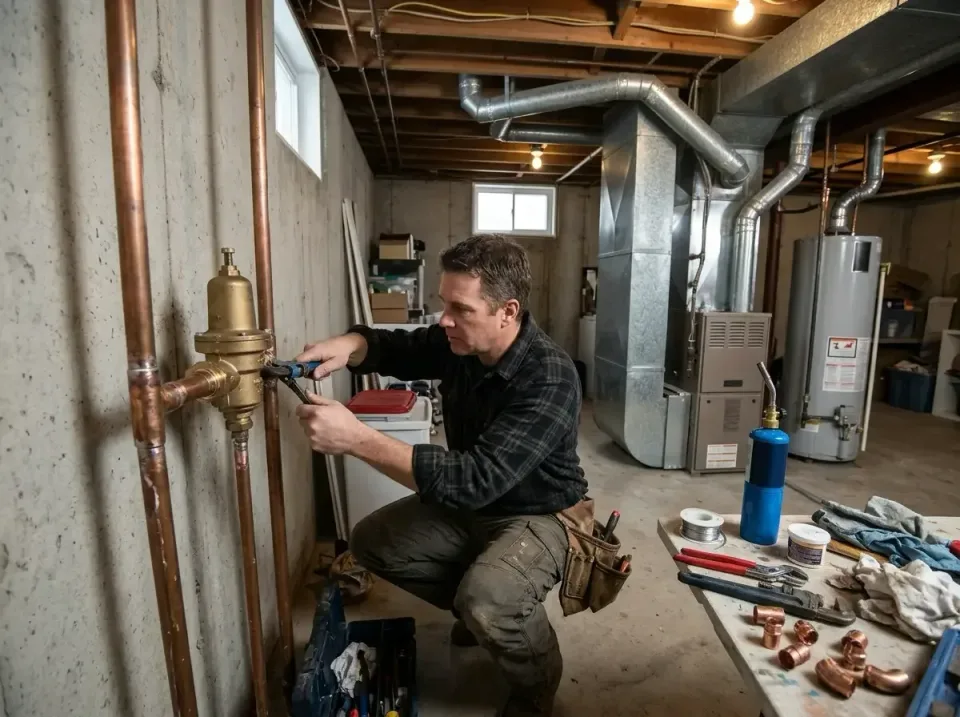
Near Terre Haute City Hall, older plumbing and difficult shutoff access can make a pressure complaint less straightforward than a quick fixture swap. We check the source before recommending a repair.
Seasonal groundwater changes can affect private-well performance, so well customers should note whether pressure shifts over time. Freeze-thaw cycles can also stress buried water lines; if a pressure change follows a cold-weather spell, tell our crew what changed and when.
Heavy snow may block access to an exterior shutoff, so keep its location in mind before a visit. We protect the work area and perform only the work you approve.
A shower that loses force while nearby taps stay steady suggests a fixture-level restriction; in Terre Haute, our crew compares flow at other outlets before tracing the affected branch. You can safely check whether the faucet or showerhead is fully open and whether hot and cold flow differ.
If cold water runs weak throughout an older brick or frame home, the cause may be farther upstream. Spring rainfall can saturate soil around buried service lines, so we inspect accessible supply components and ask about recent changes before recommending a repair. Check another cold tap and note whether the drop is house-wide.
When a well pump loses power during a severe storm, pressure may fall until power returns; do not open electrical equipment. We identify the supply type and test the system. Service coverage includes ZIP codes 47807, 47809, 47804, 47803, 47802, 47801, and 47808.
Cold winters can freeze exposed pipes or damage an outdoor hose bib, leaving a Terre Haute customer with weak flow after a thaw. Near Honey Creek Mall, our team asks whether the pressure change followed freezing weather and checks accessible plumbing before proposing repairs. If a hose bib is involved, look for visible damage without forcing a frozen handle.
A humid continental climate brings seasonal changes that can matter inside local homes. We check the affected fixtures and accessible supply components, then explain whether the evidence points to a local restriction or a broader pressure issue.
Hard freezes can expose poorly insulated plumbing, so crawlspace access and pipe condition may affect the work. A brief note of which fixtures are weak helps us focus the inspection.
In Deming Woods, our crew can compare flow at several fixtures to determine whether a weak shower stream is isolated or part of a larger supply problem. We ask customers to keep the affected fixtures accessible for testing.
In Deming Park, a single faucet with weak flow may have a localized obstruction; check another tap before scheduling so you can describe whether the problem is limited. Dewey residents with low pressure at several fixtures can tell us whether hot, cold, or both sides are affected, which helps narrow the inspection.
In Twelve Points, a pressure change across the whole property calls for checking the main supply path rather than changing one fixture. Indoor heating can worsen leaks in vulnerable plumbing, so note any visible dampness without removing pipe covers. A clogged supply pipe or shower-flow issue needs inspection before repair is chosen.
Get a clear explanation of the pressure problem before repair work begins.
The crew checks affected fixtures and the plumbing system to trace the source, from a regulator or clogged line to a well system or fixture. That helps keep recommendations tied to what they find.
After diagnosis, the technician explains the findings and reviews repair options before starting. You can understand the proposed scope and decide how to proceed without unexpected work being added.
With 11 years in business and experience with Indiana homes, the team recognizes how mineral buildup, older plumbing, and hard freezes can affect water pressure. Routes are coordinated across cities and smaller communities.
The visit moves from locating the cause to checking the repair result.
Discuss the Issue
Tell the team which fixtures are affected and when pressure changes. The technician uses those details to focus the visit and identify what parts of the plumbing system need checking.
Test the System
The technician checks affected fixtures, tests multiple outlets, and records static and flowing pressure. These checks help distinguish a local restriction from a problem elsewhere in the plumbing system.
Repair and Retest
The crew shuts off water before opening pressurized piping and confirms replacement parts fit the pipe size and pressure rating. After repairs, they retest pressure and fixture flow so you can see the result.
Cloudy or rust-tinted water is a visible change worth paying attention to, especially if it continues after the water runs briefly. Note which outlets show the change and whether it appears with normal flow. Discoloration may point to plumbing conditions beyond pressure alone.
Banging or vibrating pipes can appear alongside changing water flow and may signal a plumbing condition that needs attention. Notice where the sound occurs and whether it follows a tap opening or closing. Avoid tightening or adjusting pressurized piping yourself.
Severe thunderstorms can disrupt utilities and expose existing plumbing issues. If pressure changes after a storm, note which fixtures are affected and whether the change persists. A pressure check can help separate a brief supply interruption from a problem in the home's plumbing.
Humid, stormy summer weather can bring repeated heavy rain and interruptions that make household pressure changes noticeable. If flow stays uneven after conditions settle, have the system checked. A technician can test fixtures and pressure to look for a lasting plumbing cause.
Fall is a useful time to address pressure concerns before colder weather puts added strain on exposed plumbing. Changes in flow may point to buildup, a regulator, or another system issue. Diagnosis can identify the source and clarify repair options before freezing conditions arrive.
Variable snowfall and hard freezes can affect plumbing, especially where pipes are exposed to cold. If pressure changes during cold spells, note the affected areas and arrange an assessment. A technician can trace whether the issue involves a line, regulator, fixture, or water supply system.
Permit requirements can depend on the work and local rules. Ask whether the contractor determines if a permit applies and who arranges it. That helps clarify responsibilities before work starts and avoids confusion about required approvals.
Ask how appointment windows are set and whether routes affect availability. The team coordinates service across Indiana, including cities and smaller communities. Knowing how scheduling works helps you plan access to the home without assuming a specific arrival time.
Clarify whether the visit includes checking affected fixtures, testing multiple outlets, and recording pressure. Knowing what is covered helps you understand the scope of the assessment and what information the technician will use before discussing repair options.
Ask how findings and repair options are presented, and whether you can review the proposed scope before work begins. This makes expectations clear and gives you a chance to understand what is being recommended before authorizing a repair.
Request a quote online or contact our Terre Haute, IN team directly by phone or email.
Compare a second faucet and check whether hot, cold, or both flows are weak. If neighbors also notice a change after a storm, that can help distinguish a service interruption from a problem inside your home.
A problem limited to one faucet may be at that fixture or its branch piping. Note whether other taps have normal flow; our team can compare fixtures before recommending a repair.
Yes. A hard freeze can affect exposed plumbing or an outdoor hose bib. If pressure changes after freezing weather, check for visible damage and avoid forcing a frozen handle.
Low Water Pressure Repair is also available in these nearby communities across Indiana.