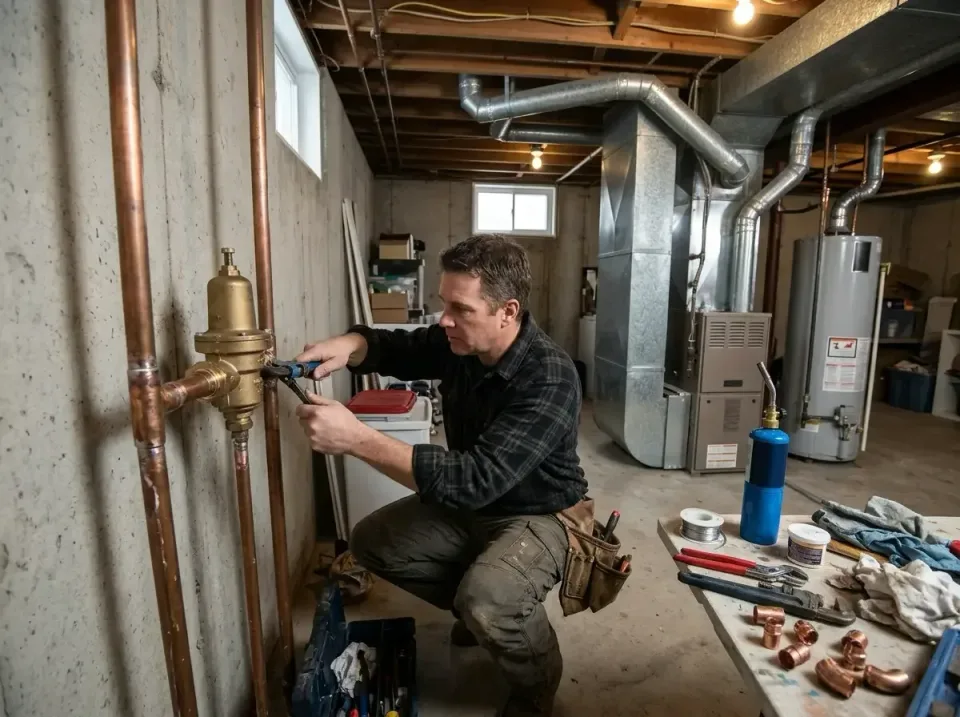
Booster Pump Installation
Booster pump installation for Indiana homes includes pump sizing and electrical coordination; typical jobs run $800–$2,500, depending on pump capacity and electrical work.
When the shower stream suddenly weakens or pressure surges from one fixture to another, a failing pressure-reducing valve may be the cause but a single symptom is not enough to condemn it. We check whether the issue affects the whole home and test the regulator before recommending repair or replacement.
Near Indiana Dunes National Park, changing pressure can turn an ordinary shower or laundry cycle into a daily frustration; residents near Indiana Dunes State Park can use the same whole-home checks before assuming the street supply is at fault. The Indiana Statehouse is a familiar Indianapolis landmark, but plumbing decisions at home still call for measurements, not guesses. We explain what the readings show and what work is actually needed.
A pressure regulator deserves testing when weak flow affects several fixtures, or pressure swings across the home without an obvious fixture-level cause. A shower stream that fades while nearby taps also run poorly is different from one clogged aerator.
We start by checking pressure at the service entrance and comparing readings with fixtures closed and running; the change between those readings can help separate a regulator fault from a supply or pipe restriction. One clue is not a diagnosis.
For a single weak faucet, clean or inspect the aerator first. If pressure is poor throughout the home, the regulator moves higher on our suspect list, but a shutoff valve or pipe restriction can imitate the same failure.
At Indiana State Museum, a visitor sees how much local history depends on preserving working systems; in a home, checking the whole water path helps avoid replacing a sound valve. Indiana has a humid continental climate across much of the state, but pressure trouble is still diagnosed at the pipes, not inferred from the weather.
Repair can make sense when testing identifies a serviceable adjustment or a specific accessible fault and the valve body and connections remain sound. Replacement is more likely when the regulator cannot hold a steady setting, shows damage or leakage, or continues to produce erratic pressure after a proper adjustment. We inspect the valve and its connections before deciding; mineral buildup or a restriction elsewhere can make a working regulator look guilty.
Indiana’s colder, snowier northern winters can expose vulnerable plumbing to freeze damage, so we check for related leaks or pipe damage rather than treating every pressure change as a valve failure. By contrast, Southern Indiana winters are generally milder, but a regulator that cannot control pressure still merits testing.
Near Indiana University Bloomington, an owner may notice a change across several fixtures; we compare readings at the service entry and fixtures to find where the pressure drops. Our crew has spent more than 11 years tracing these problems before recommending work.
You can note which fixtures are affected and whether the symptom changes when another tap or appliance runs. You can also look for visible leaks without taking apart the valve.
Stop there if the regulator is on the main supply, water must be shut off, or a fitting is corroded; opening pressurized piping can cause flooding or damage. Do not turn the adjustment screw just to see what happens. A pressure change can create a new problem if you do not know the starting reading.
At Indianapolis Union Station, people follow signs to find their route; at home, the useful first move is to identify whether the supply comes from a municipal system or a private well. If several fixtures are weak, we record pressure with a gauge and inspect the regulator and accessible piping.
For one isolated fixture, check the aerator before replacing pipes. Call a professional when symptoms are widespread, the valve leaks, or pressure is persistently unstable.
A pressure problem can originate outside the regulator. A partly closed main valve, a clogged line, or a supply issue may reduce flow even when the regulator works correctly.
We test at more than one point and compare static pressure with pressure under flow before discussing repair options. The practical detail that often gets skipped is whether the complaint affects hot and cold water alike; that pattern helps narrow the source without guessing.
Near the Allen County Courthouse, older plumbing can make an inspection especially useful: a regulator replacement will not clear scale from a restricted pipe. We explain our findings in plain language, then complete only work the customer approves. If testing shows a regulator fault, we can outline repair versus replacement based on its condition, connections, and ability to hold the setting.
If several taps are weak, but the regulator looks intact, testing can show whether repair or a different fix makes sense. A well-system symptom calls for a different inspection than a municipal-supply regulator fault. Here are the distinctions we check.
| Option | Best for | Key detail |
|---|---|---|
| Pressure regulator repair | A specific fault in a serviceable valve | Common connections are ¾ inch; confirm the installed size |
| Pressure regulator replacement | A valve that will not control pressure reliably | Residential supply lines commonly measure ½–1 inch |
| Booster pump installation | Inadequate incoming supply after diagnosis | A pump raises pressure; it does not correct a faulty regulator |
| Well pressure tank repair | Pressure trouble on a private well | Tanks commonly range from 20–80 gallons |
Columbus Architecture gives visitors a reason to notice building details; inside a home, pipe and valve details help determine what fits. Conner Prairie’s historic setting is a reminder that older systems can differ, so we verify connections instead of assuming.
If a property near Eagle Creek Park relies on a well, flooding can affect the well and make water-quality checks important before returning it to normal use. Ask what was measured and why the recommended option fits.
A clear work area and a useful symptom history help us test the regulator without wasting time. Keep the water meter and valve accessible, and tell occupants if a shutoff will be needed.
Describe the symptoms: Note which fixtures lose pressure and whether the problem changes when other water is running.
Identify the supply: Tell the plumber whether the home uses municipal water or a private well.
Clear the work area: Move stored items away from the meter, regulator, and nearby fixtures.
Plan for a shutoff: Schedule a time when occupants can manage a temporary interruption in water service.
Protect the space: Move belongings and place floor protection near the plumbing access point.
Cold winters can freeze exposed pipes and damage outdoor hose bibs, so mention any recent freeze or visible exterior leak. During drought, a private well may produce less water; the regulator should not be blamed before the well supply is checked.
If you are near Brown County State Park or Falls of the Ohio State Park, these are still the same practical checks: report the symptoms, clear access, and leave pressure testing and valve work to a qualified professional. For homes near Indianapolis Motor Speedway, arrange access before the appointment rather than trying to dismantle the valve yourself.
Yes, one weak faucet can have a clogged aerator or local restriction rather than a failed regulator. If the problem started after freeze-thaw cycles stressed buried water lines, have the broader supply checked before replacing the valve.
Pressure regulator replacement typically costs $250–$700, with valve size and labor affecting the job. A pressure diagnosis is $75–$250 for testing and access, and the readings help confirm whether replacement is needed.
No, do not turn the adjustment screw before the system is tested; the change may hide the cause or create unsafe pressure. Rapid temperature swings can raise freeze risk in crawlspaces, so report any recent exposure or leak and have the supply checked.
Indiana Plumbing Code, 675 IAC 16, governs plumbing work, and local permit requirements vary by municipality. Ask the contractor whether a permit applies to your specific work and location before the valve is replaced.
Ask for the well pump and pressure system to be tested rather than assuming the regulator is still at fault. Severe storms may cause power loss affecting well pumps, so confirm power and pump operation before deciding on another valve repair.
A regulator should be repaired or replaced when testing shows that it cannot control pressure reliably not simply because one tap runs weak. Let us measure the system, check the valve and supply path, and explain the options before work begins.
Prepare for the visit by clearing access to the shutoff and noting when the pressure changes. Heavy snow can block an exterior shutoff, so clear a safe path to it if conditions allow.
A summer thunderstorm can disrupt municipal service, so note whether the pressure change began during or after a storm. In areas near the Ohio Riverfront in Evansville, seasonal groundwater changes may also affect private well performance.
For a measured assessment, contact Indiana Plumbing Pros and ask about Pressure Regulator Repair.
Yes, one weak faucet can have a clogged aerator or local restriction rather than a failed regulator. If the problem started after freeze-thaw cycles stressed buried water lines, have the broader supply checked before replacing the valve.
Pressure regulator replacement typically costs $250–$700, with valve size and labor affecting the job. A pressure diagnosis is $75–$250 for testing and access, and the readings help confirm whether replacement is needed.
No, do not turn the adjustment screw before the system is tested; the change may hide the cause or create unsafe pressure. Rapid temperature swings can raise freeze risk in crawlspaces, so report any recent exposure or leak and have the supply checked.
Indiana Plumbing Code, 675 IAC 16, governs plumbing work, and local permit requirements vary by municipality. Ask the contractor whether a permit applies to your specific work and location before the valve is replaced.
Ask for the well pump and pressure system to be tested rather than assuming the regulator is still at fault. Severe storms may cause power loss affecting well pumps, so confirm power and pump operation before deciding on another valve repair.
Browse all nationwide service options and choose the right fit for your project.
Booster pump installation for Indiana homes includes pump sizing and electrical coordination; typical jobs run $800–$2,500, depending on pump capacity and electrical work.
We trace sudden pressure loss for Indiana homeowners, checking fixture flow and accessible supply lines; typical repairs run $150–$500, depending on access and parts.
We test residential water pressure with a gauge and compare static and flowing readings; testing time and access shape the diagnostic fee.
We repair residential pressure regulators, including accessible valve and connection work; typical repairs run $250–$700, depending on valve size and labor.
Low hot water pressure service checks hot-side valves, fixtures, and accessible pipe restrictions; typical repairs run $150–$600, depending on access and parts.
We trace weak cold-water flow in homes, checking fixtures and accessible supply piping; typical repairs run about $100–$500, depending on access and the affected pipe section.
Low Faucet Water Pressure service for homeowners with weak sink flow, including aerator and faucet checks; cost depends on access, parts, and the source of the restriction.
We restore weak shower flow by checking the showerhead, valve and supply path; access and repair scope shape the cost.
Whole-house pressure service traces weak flow across a home’s supply, fixtures, and pressure controls. Typical repair costs depend on the source, parts, and access.
We repair residential well pumps and pressure controls, checking the tank and switch; typical repair costs $300–$1,200 depending on tank size and parts.
Repair well pressure tanks for homeowners, including tank and component work; typical jobs run $300–$1,200, depending on tank size and parts.
We trace weak upstairs flow in homes, checking the pressure path and accessible piping. Repair scope depends on access, pipe condition, and parts.
We replace household pressure regulators, including valve sizing and fit; typical jobs run $250–$700, driven by valve size and labor.
We clear or repair clogged residential water lines, including accessible pipe sections; typical jobs run $200–$1,500, depending on blockage location and pipe access.
We repair softener valves, clogged resin beds, and bypasses; typical repairs run $150–$600, depending on parts and access.
Select a city to find local low water pressure repair providers we cover in Indiana.
Share your job scope for low water pressure repair in Indiana — we will review fit and pricing before scheduling.